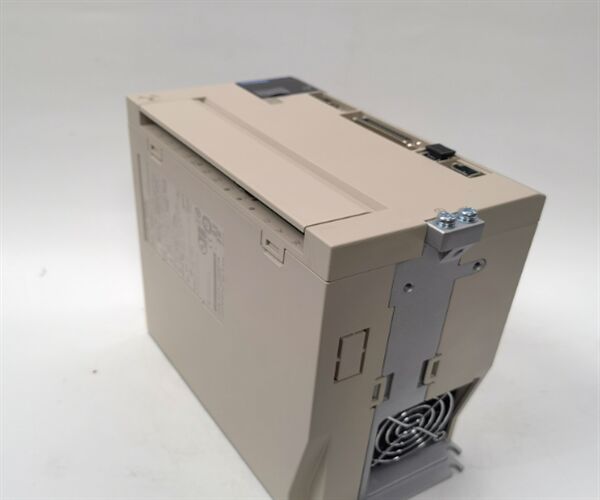
The SGD7S-180A00A002 is a high-performance servo drive from Yaskawa, designed to deliver precise and efficient motion control in various industrial automation applications. It is part of the SGD7S series, known for its advanced features and high reliability.
High Performance Drive: The SGD7S series uses advanced control algorithms to provide exceptional motion control and energy efficiency, making it ideal for high-precision and high-dynamic-response applications.
Wide Compatibility: It supports various communication protocols like EtherCAT, Modbus, and others, ensuring seamless integration with a wide range of PLCs and control systems.
Compact Design: The drive is designed to be compact, making it suitable for installations in space-constrained industrial equipment.
Energy Efficiency: It features low energy consumption, helping to reduce operating costs, especially in continuous operation scenarios.
Integrated Control: The SGD7S comes with advanced control functions, including position, speed, and torque control, reducing the need for external control units.
Stability and Reliability: It offers robust protection features, such as overload, overheat, and overvoltage protection, ensuring stable operation even in harsh environments.
Robotics: Used to drive industrial robots, providing precise motion control.
Packaging Machinery: Ideal for high-speed production lines and packaging equipment, offering efficient drive solutions.
Automation Equipment: Commonly used in automated production lines, CNC machines, conveyors, and other industrial automation systems.
Similar Products
| SERVO_DRIVER,YASKAWA,SGDV-R70A05A |
| SERVO_MOTOR,YASKAWA,SGMAH-04AAA2C |
| SERVO_DRIVER,YASKAWA,SGDV-180A05A |
| SERVO_DRIVER,YASKAWA,SGDS-20A05A |
| SERVO_DRIVER,YASKAWA,SGDS_75A05A |
| AC_MOTOR),YASKAWA,SGMAH-A3A1A41 |
| SERVO_DRIVER,YASKAWA,SGDS-15A12A |
| SERVO_MOTORYASKAWA,SGMCS-16E3B11 |
| SERVO_MOTORYASKAWA,SGMAS-08ACAH761 |
| SERVO_MOTOR,YASKAWA,SGMAS-04A2A21 |
| SERVO_MOTOR,YASKAWA,SGMAH-02A1A21 |
| SERVO_MOTOR,YASKAWA,SGMAH-08A1A21 |
| SERVO_DRIVER,YASKAWA,SGDV-120A15A |
| SERVO_DRIVER,YASKAWA,SGDV-120A11A |
| SERVO_DRIVER,YASKAWA,SGDV-R70A11A |
| SERVO_DRIVER,YASKAWA,SGDV-R70A15A |
| SERVO_DRIVER,YASKAWA,SGDV-1R6A11A |
| SERVO_DRIVER,YASKAWA,SGDV-2R8A11A |
| SERVO_DRIVER,YASKAWA,SGDV-5R5A11A |
| SERVO_DRIVER,YASKAWA,SGDV-200A11A |
| SERVO_DRIVER,YASKAWA,SGDV-200A15A |
| AC_MOTOR,YASKAWA,SGM7A-10AFA6C |
| SERVO_DRIVER,YASKAWA,SGD7S-120AE0A |
| SERVO_DRIVER,YASKAWA,SGDM-50ADA |
| SERVO_DRIVER,YASKAWA,JZNC-XRK01D |
| SERVO_DRIVER,YASKAWA,SGDV-330A11A |
| SERVO_MOTOR,YASKAWA,SGDV-R90A01B |
| SERVO_DRIVER,YASKAWA,SGDV-R90A11A |
| SERVO_MOTOR,YASKAWA,SGMPH-04AAA41 |
| SERVO_DRIVER,YASKAWA,SGDH-02AE |
| SERVO_MOTORYASKAWA,SGDV-R70A01A |
| SERVO_DRIVER,YASKAWA,SGDS-15A05A |
| SERVO_DRIVER,YASKAWA,SGDS-01A05A |
| SERVO_MOTOR,YASKAWA,SGMPH-08AAAH12C |
| SERVO_MOTOR,YASKAWA,SGMGH-09ACA2C |
| SERVO_DRIVER,YASKAWA,SGDV-R90F01A |
| SERVO_DRIVER,YASKAWA,SGDV-1R6A15B |
| SERVO_MOTOR(,YASKAWA,SGMPH-08AAA2C |
| LINEAR_MOTOR,YASKAWA,SGLFW-35A230AP |
| SERVO_MOTOR(,YASKAWA,SGMAS-12A2A21 |
| SERVO_MOTOR(,YASKAWA,SGMAH-02AAA21 |
| SERVO_MOTOR(,YASKAWA,SGMAS-A5A2A41 |
| SERVO_DRIVER,YASKAWA,SGDM-08ADA-Y116 |
| SERVO_DRIVER,YASKAWA,SGDM-20ADA |
| SERVO_DRIVER,YASKAWA,SGDR-EH130RY55 |
| SERVO_MOTOR,YASKAWA,SGM-08A314C |
| SERVO_MOTOR(,YASKAWA,SGDV-R70A11B |
| SERVO_MOTOR(,YASKAWA,SGMAH-08AAA2B |
| LINEAR_MOTOR(,YASKAWA,SGLGW-30A080CP |
| SERVO_DRIVER,YASKAWA,JASP-WRCA01B |
| SERVO_MOTOR,YASKAWA,SGDV-5R5A15A |
| SERVO_MOTOR),YASKAWA,SGMAH-02AAA2B |
| SERVO_MOTOR,YASKAWA,SGMPH-15AAA41 |
| SERVO_MOTOR,YASKAWA,SGM-01A314 |
| SERVO_MOTOR,YASKAWA,SGDS-30A05A |
Stepping Modes
The following are the most common drive modes.
• Wave Drive (1 phase on)
• Full Step Drive (2 phases on)
• Half Step Drive (1 & 2 phases on)
• Microstepping (Continuously
varying motor currents)
For the following discussions please refer to the figure 6.
In Wave Drive only one winding is energized at any given time. The stator is energized according to the
sequence A → B → A → B and the rotor steps from position 8 → 2 → 4 → 6. For unipolar and bipolar wound motors with the same winding parameters this excitation mode would result in the same mechanical position. The disadvantage of this drive mode is that in the unipolar wound motor you are only using 25% and in the bipolar motor only 50% of the total motor winding at any given time. This means that you are not getting the maximum torque output from the motor
In Full Step Drive you are energizing two phases at any given time. The stator is energized according to
the sequence AB → AB → AB → AB and the rotor steps from position 1 → 3 → 5 → 7 . Full step mode results in the same angular movement as 1 phase on drive but the mechanical position is offset by one half of a full step. The torque output of the unipolar wound motor is lower than the bipolar motor (for motors with the same winding parameters) since the unipolar motor uses only 50% of the available winding while the bipolar motor uses the entire winding.
Half Step Drive combines both wave and full step (1&2 phases on) drive modes. Every second step only
one phase is energized and during the other steps one phase on each stator.
The stator is energized according to the sequence AB → B → AB → A → AB → B → AB → A and the
rotor steps from position 1 → 2 → 3 → 4 → 5 → 6 → 7 → 8. This results in angular movements that are half of those in 1- or 2-phases-on drive modes. Half stepping can reduce a phenomena referred to as resonance
which can be experienced in 1- or 2- phases-on drive modes.
SYNCHRONOUS SPEED
The speed with which the stator magnetic field rotates, which will determine the speed of
the rotor, is called the Synchronous Speed (SS). The SS is a function of the frequency
of the power source and the number of poles (pole pairs) in the motor. The relationship
to calculate the SS of an induction motor is:
1 SS = (120 X f) / P
Where:
SS = Synchronous Speed (RPM)
f = frequency (cycles / second) = 60
P = number of poles (pole pairs)
![]()